Tratson’s limescale protection is proven to work.
The effect was proven by an independent scientific study on the technology – submitted to ETH Zurich.
This dissertation was co-financed by SAEFL (now the Federal Office for the Environment FOEN).
The outstanding performance and effectiveness of our technology was documented over a period of 4 years.
Tratson is proud to be the only company equipped with a technology that has been the subject of an independent doctoral thesis (thesis submitted to ETH Zurich).
This thesis was co-financed by SAEFL (now FOEN – Federal Office for the Environment).
You can download the SAEFL summary below and see for yourself the effectiveness of our products.
Click here to access the full SAEFL report “Electromagnetic water treatment” (Swiss Agency for the Environment, Forests and Landscape).
Tratson is effective against limescale: Hard water leads to annoying limescale problems.
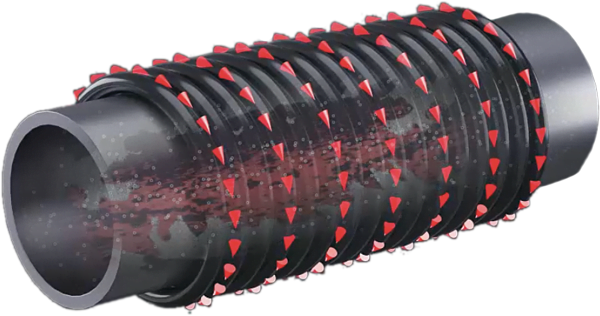
In the dissertation, limescale deposits were simulated in a pipe section and treated with a limescale protection device with Tratson technology: the amount of limescale deposited over a period of three years was six times lower!
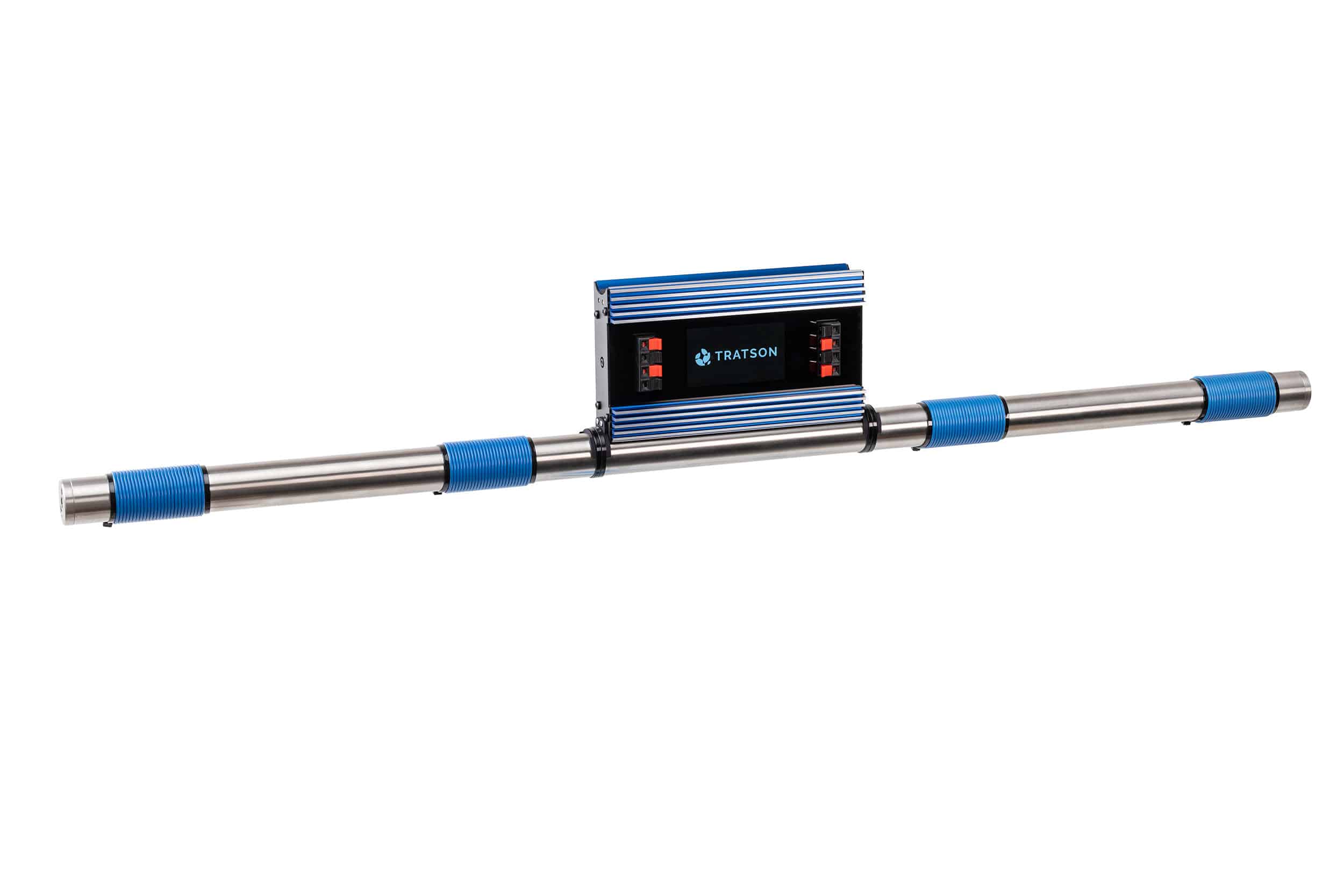
Part of the dissertation, which was submitted to ETH Zurich, was a case study on the drinking water supply of a Swiss Army fortification.
The water used was extremely hard.
In addition to the scientifically proven results, you will find below the practical experiences of the plant manager of the fortress:

The taps, especially the Neoperl inserts, had to be replaced every year as limescale and rust clogged the strainers.
They had to be dismantled 3-4 times a year and soaked in acid for descaling. Since the installation of the electromagnetic devices, the Neoperl inserts only need to be unscrewed once a year and if limescale is present, it can be easily scraped off.
The cisterns were so heavily calcified that the flushing system was regularly blocked.
Every year, a 1-2 mm thick layer of limescale had to be removed from all the cisterns. Now there is only loose material that can be rubbed off with the fingers.
In the past, despite a high rinse gloss content of 0.70 g/L, glasses and dishes were cloudy white after washing. Glasses are now beautifully transparent when washed with a minimal rinsing gloss content of 0.15 g/L.
After boiling water several times, pans had to be scrubbed with copper cloths and special detergent, otherwise a 1.5-2 mm thick layer of limescale would form in 2-3 months. Once the appliances have been installed, the limescale can be easily wiped off with a cloth and water.
The heating rods of the boiler, which is in constant operation, were completely calcified within a year and had to be replaced each time.
The boiler could only be opened with great effort and the scale was as hard as a rock. Since the electromagnetic devices were installed, it opens easily and there is loose material inside that can easily be wiped off the heating rods with a finger.